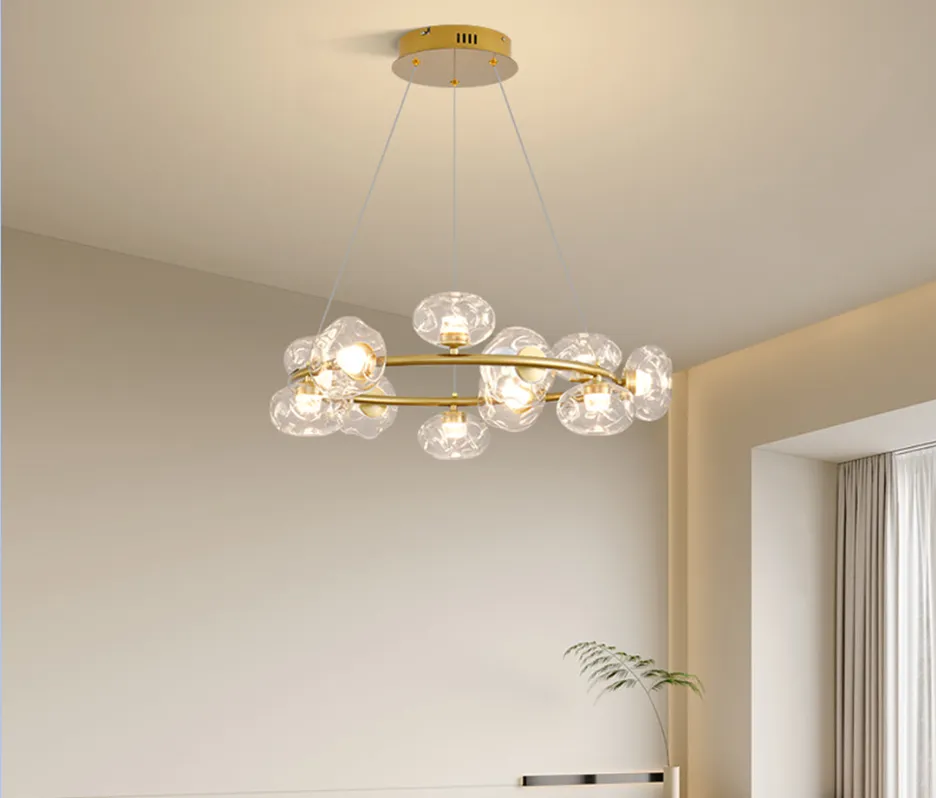
A chandelier can give a room a clear focal point, but choosing one becomes difficult when traditional designs, modern linear fixtures, and sculptural glass clusters all compete for attention. Homeowners often select a fixture because it looks impressive in a product photo, then discover that it feels too large, hangs too low, or produces uncomfortable glare in the finished room.
The choice between a conventional chandelier and a bubble chandelier should begin with the room’s proportions and activities. One creates a more structured visual centre, while the other offers an airy arrangement of glass spheres. Both can work beautifully when their scale, hanging height, and light output are planned before installation.
Start With the Job the Chandelier Must Perform
Decide whether the fixture will provide general illumination, light a dining table, define a seating area, or function mainly as decoration. A dining chandelier needs to illuminate food and faces without creating glare. An entry fixture should remain visible from several levels while safely clearing the walking area. A living room chandelier may need to support conversation and atmosphere rather than provide strong task light.
Do not expect one decorative fixture to perform every lighting function. A chandelier usually works best as part of a layered plan that includes wall lights, lamps, recessed fixtures, or under-cabinet lighting where appropriate.
Homeowners can compare candle-style, ring, branch, linear, crystal, and globe-based chandeliers after defining the practical role of the ceiling fixture. Function narrows the options more effectively than choosing a finish first.
Understand the Difference in Visual Weight
Traditional chandeliers often have a clear frame, central body, and repeated arms. Their structure gives the room a sense of order and can complement formal dining rooms, symmetrical furniture arrangements, and interiors with architectural moulding.
Bubble chandeliers use groups of glass spheres to create a softer and more fluid silhouette. Because the globes reflect light and surrounding colours, the fixture may feel visually lighter than a solid shade of the same overall dimensions. However, a large cluster can still dominate a compact room.
Consider what is already competing for attention. A room with patterned wallpaper, dramatic artwork, or detailed furniture may benefit from a quieter fixture. A restrained interior can accommodate a more sculptural glass arrangement without feeling crowded.
Size the Fixture According to the Furniture
When a chandelier hangs above a table, the furniture provides a more useful sizing reference than the room alone. The fixture should be narrower than the tabletop so people can sit, stand, and move around it comfortably. It should also appear substantial enough to anchor the table rather than looking like a small pendant placed in the middle.
For a rectangular table, a linear chandelier or elongated cluster can follow the table’s length. Round and square tables often work well with circular, branching, or compact clustered fixtures. In a living room, relate the chandelier to the seating arrangement or coffee table instead of centring it automatically within the entire open-plan space.
Create a full-size paper or cardboard template of the fixture’s width. Suspend it temporarily from the ceiling and view it from the doorway, seating area, and nearby rooms. This simple test can reveal whether the fixture interrupts sightlines or appears undersized.
Use Hanging Height to Protect Sightlines
Many dining chandeliers are initially positioned approximately 30 to 36 inches above the tabletop. This is only a starting point. Ceiling height, fixture dimensions, glass transparency, and the height of household members may require adjustment.
Sit at the table and check whether the fixture blocks the person opposite you. Stand in the adjoining room and look across the space. A large chandelier may need to hang slightly higher to preserve an open view, while a small fixture positioned too high can lose its relationship with the table.
In open areas without furniture beneath the chandelier, confirm adequate walking clearance and follow local requirements. Stairwells and two-story entries need additional planning because the fixture must look balanced from both upper and lower levels.
Choose Clear, Frosted, or Coloured Glass Carefully
The glass finish changes both the appearance of a bubble chandelier and the quality of its light. Clear globes create sparkle and allow decorative bulbs to remain visible. They can look lively in a dining room or entry but may produce glare when the bulbs are viewed directly.
Frosted or opal glass diffuses the light and hides the internal bulb. This can create a softer effect in bedrooms, living rooms, and dining areas where visual comfort is important. Amber and smoke-grey globes introduce colour even when the fixture is switched off, but they may reduce the amount of usable light reaching the room.
When comparing a bubble chandelier, check whether the glass colours shown are actual options and whether the bulbs are included. Product photography may also show warm bulbs that make clear glass appear amber.
Check the Light Source and Dimming
Count the number of bulbs or integrated LED elements and review the total lumen output whenever it is available. A fixture with many small globes is not automatically brighter than one with fewer larger bulbs. Shade colour, glass thickness, bulb position, and beam direction all affect the result.
For dining and living spaces, dimming allows the chandelier to support different activities. Bright light may be useful for cleaning or setting the table, while lower output feels more comfortable during dinner or quiet evenings.
Confirm that the bulbs, LED driver, wall dimmer, and fixture are compatible. If the chandelier uses integrated LEDs, check the stated colour temperature and whether the light module or driver can be replaced. For replaceable bulbs, verify the base type, maximum wattage, and physical space inside each globe.
Coordinate the Chandelier With Nearby Fixtures
In an open-plan home, the chandelier may be visible beside kitchen pendants, recessed lights, wall sconces, and lamps. These fixtures do not need to come from one matching collection, but they should share a few characteristics.
Repeat a metal finish, glass colour, rounded shape, or general colour temperature. A bubble chandelier with clear globes might relate to simple glass kitchen pendants, while its black or brass frame can connect with cabinet hardware or furniture legs.
Avoid repeating the bubble motif everywhere. One strong cluster will feel more intentional when nearby fixtures are simpler and visually supportive.
Verify Ceiling Support Before Purchase
Bubble chandeliers can appear weightless, but multiple glass globes and a metal frame may create considerable actual weight. Check the complete fixture weight rather than judging it by appearance.
The electrical box and supporting structure must be rated for the chandelier. Large or heavy fixtures may require additional bracing connected to a ceiling joist or other structural support. The mounting method becomes especially important with long linear fixtures or installations on sloped ceilings.
Review access as well. The installer may need to assemble branches, attach individual globes, and make final adjustments after the frame is suspended. Hire a qualified electrician when the existing support, wiring, ceiling construction, or fixture weight is uncertain.
Plan for Cleaning and Maintenance
A conventional chandelier with open arms may be easier to dust than a dense cluster of glass globes. Bubble chandeliers require access around each sphere, and fingerprints may be visible on clear glass after installation.
Before purchasing, consider how the fixture will be reached safely. A complex chandelier over a staircase or double-height entry may require professional cleaning. Removable glass can simplify maintenance, but each globe must be handled and reattached carefully.
Never spray cleaner directly onto an installed electrical fixture. Turn off the power, allow bulbs to cool, and use the cleaning method recommended by the manufacturer.
Choose the Fixture That Supports the Whole Room
A traditional chandelier is often the better choice when the room needs symmetry, structure, or a familiar architectural statement. A bubble chandelier works well when you want a more playful, airy, or sculptural focal point.
Neither style is automatically more modern or more practical. The successful choice is the one that fits the furniture, preserves sightlines, provides comfortable light, and can be safely supported and maintained. When those practical details are resolved first, the chandelier becomes part of the room rather than an object competing with it.

