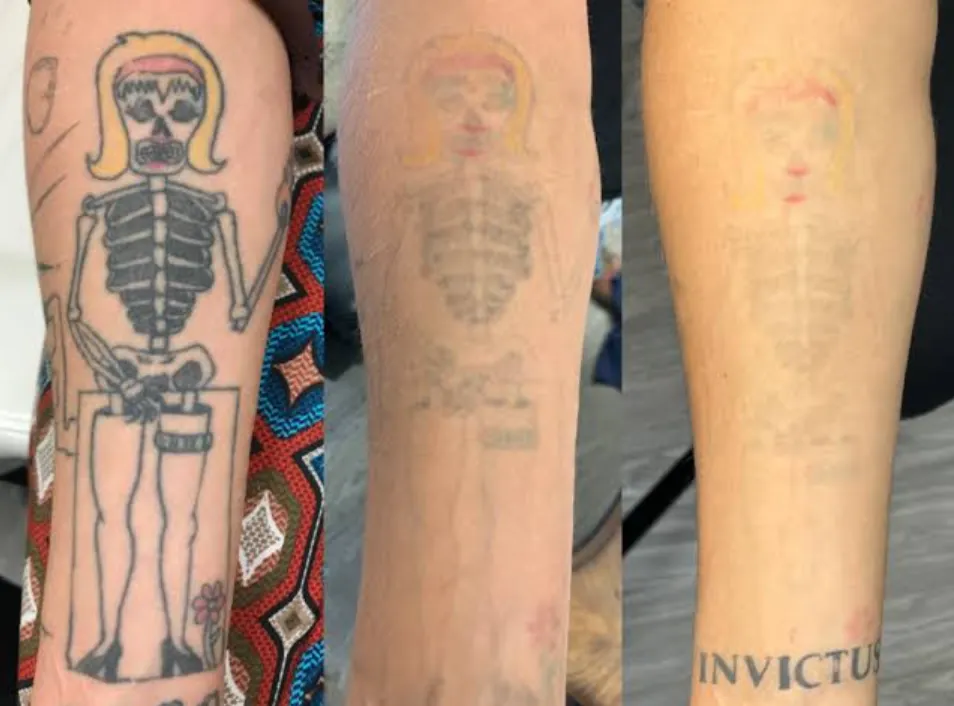
The skin looks angry within minutes of a laser tattoo removal session — redness, swelling, and sometimes a raised, blistered texture that can be alarming if you weren’t warned about it beforehand. That reaction is normal and expected, but knowing what’s coming (and what actually requires attention) makes the days after treatment far less stressful. Here’s a breakdown of what typically happens after a session and how to handle it.
Immediately After Treatment
The treated area will likely be red, swollen, and warm to the touch right after the laser passes over it. Many people describe the sensation as similar to a sunburn, and it’s common to see the tattoo turn a frosty white color for a few minutes before the redness sets in. This frosting effect happens because the laser rapidly heats the ink particles, and it fades on its own without any action needed.
Pinpoint bleeding or small dots of blood can also appear, especially in areas with dense or dark ink. This is a sign that the laser reached the ink deep in the skin, not a complication. Most clinics apply a cold compress or ice pack right after treatment to bring down swelling before sending you home with an ointment and bandage.
The First 24 to 48 Hours
Swelling and redness usually peak within the first day and start to calm down by the second. Blistering is common, particularly on areas with thin skin like wrists, ankles, or the inner arm. Blisters can look concerning, but they’re part of the skin’s natural response to the heat and shouldn’t be popped or picked at, since doing so raises the risk of scarring and infection.
Keep the area covered with a clean, non-stick bandage for at least the first few days. Change it daily, and wash the area gently with mild soap and water rather than scrubbing it. Some clinics recommend a thin layer of petroleum jelly or an antibiotic ointment to keep the skin from drying out and cracking.
Managing Discomfort
Over-the-counter pain relief like ibuprofen or paracetamol usually takes care of any lingering soreness, though avoid aspirin in the first day or two since it can increase bleeding. A cool compress applied for 10 to 15 minutes at a time helps with both pain and swelling. Avoid direct ice contact with the skin — wrap it in a cloth first.
Loose, breathable clothing over the treated area prevents friction and irritation, which matters more than people expect, especially if the tattoo is on a joint or area that moves a lot, like a knee or elbow. Tight clothing can rub against blisters or scabs and slow healing.
Scabbing and Peeling
Around days three to seven, the treated skin often starts to scab or form a crust. This is one of the most important stages to get right, because picking at scabs is the number one cause of scarring after tattoo removal. Let the scabs fall off naturally, even if it takes a week or two longer than expected.
Underneath, the skin may look lighter, pinker, or slightly textured. This is temporary in most cases, and normal pigment returns as the skin continues to heal over the following weeks. Peeling, similar to a sunburn shedding, often follows the scabbing phase and is a good sign that healing is progressing.
What Counts as Normal vs. What Needs Attention
Redness, swelling, mild itching, and blistering in the first week are expected. So is a temporary lightening or darkening of the skin around the treated tattoo. What’s not normal includes spreading redness after the first few days, pus or a foul smell, fever, or increasing pain rather than gradual improvement — these are signs of possible infection and warrant a call to whichever clinic performed the treatment.
Choosing a clinic with experienced practitioners makes a real difference in how predictable and manageable the recovery process feels. People searching for the best tattoo removal in Moonee Ponds often find that clinics offering clear aftercare instructions and follow-up support make the healing process far less confusing, since knowing exactly what to expect cuts down on unnecessary worry.
Between Sessions
Full removal typically takes six to ten sessions spaced six to eight weeks apart, giving the skin and immune system time to clear out the fragmented ink. Sun exposure on the treated area should be avoided between sessions, since tanned or sunburned skin is more prone to complications and pigment changes. Sunscreen with at least SPF 30 is worth applying daily to the area, even under clothing, for the full duration of treatment.
Skipping ahead or scheduling sessions too close together doesn’t speed up results — it just increases the risk of skin damage. Patience during the gaps between appointments matters as much as the aftercare immediately following each one.
The Bottom Line on Recovery
Most of what shows up after a tattoo removal session — redness, swelling, blistering, and scabbing — is the skin doing exactly what it’s supposed to do. The real work of healing happens in the two weeks between sessions, not in the clinic chair, so treating that recovery window with the same care as the treatment itself is what actually determines how the skin looks once the tattoo is gone for good.


