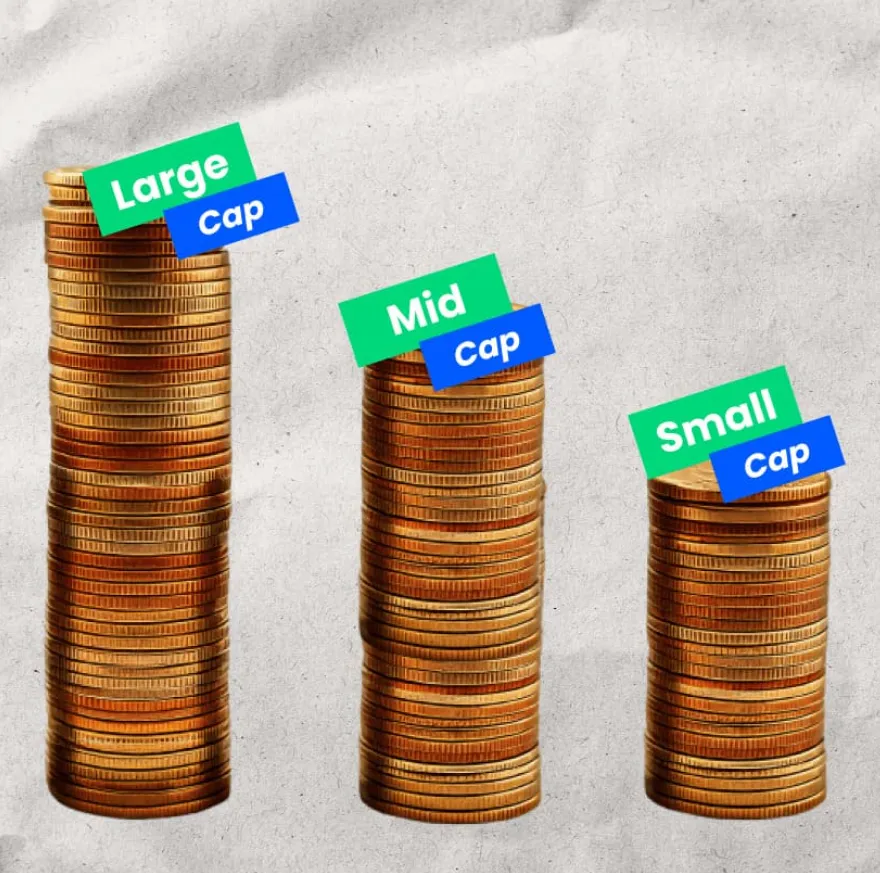
Small-cap funds often attract attention because of their potential for long-term growth. These funds invest primarily in smaller companies that may have significant room for expansion. However, they also tend to carry higher levels of risk and volatility than many other equity fund categories.
As a result, selecting a small cap fund requires more than simply looking at recent returns. A structured evaluation framework can help investors make more informed decisions and understand whether a fund may be suitable for their financial goals and risk profile.
Start with the fund’s investment approach
Every fund follows a particular investment strategy. Some focus on identifying emerging businesses with potential for rapid growth, while others may emphasise companies with relatively stable fundamentals.
Before considering any scheme, it can be useful to understand:
- The sectors the fund typically invests in
- The criteria used to select companies
- The level of diversification within the portfolio
- The fund manager’s overall investment philosophy
A clear and consistent investment approach may provide insight into how the fund is managed during different market conditions.
Look beyond short-term performance
One of the most common mistakes investors make is focusing only on recent returns. A fund that has performed well over a short period may not necessarily continue to do so in the future. Instead, it may be helpful to examine performance across different market cycles.
Consider reviewing:
- Three-year and five-year performance trends
- Performance during market corrections
- Consistency relative to its benchmark
- Risk-adjusted measures where available
Past performance may or may not be sustained in future
Assess the level of risk
Small-cap investing naturally involves higher risk. However, risk levels can vary significantly between funds.
Some schemes may hold a concentrated portfolio of stocks, while others may spread investments across a wider range of companies and sectors.
Key areas to review include:
| Factor | What to Look For |
| Portfolio concentration | Number of holdings and diversification |
| Volatility | Extent of historical fluctuations |
| Sector exposure | Dependence on specific industries |
| Liquidity profile | Ability of underlying stocks to be traded |
Understanding these factors may help investors evaluate whether a fund’s risk profile aligns with their own comfort level.
Examine the quality of the portfolio
The underlying companies within a fund can reveal a great deal about its strategy. While investors may not analyse every stock in detail, it can be useful to review whether the portfolio consists of businesses with characteristics such as:
- Sustainable business models
- Manageable debt levels
- Consistent revenue growth trends
- Experienced management teams
These factors do not eliminate risk, but they may contribute to a more disciplined investment process.
Consider the fund manager’s experience
Fund management plays an important role in small-cap investing because smaller companies often require extensive research and ongoing monitoring. When evaluating a scheme, investors may consider:
- The experience of the fund manager
- The length of time they have managed the fund
- The consistency of the investment process
- The support provided by the broader research team
A stable management structure may provide greater insight into how investment decisions are made over time.
Review expenses carefully
When comparing small-cap funds, it is worth taking a closer look at the costs involved. Every mutual fund charges an expense ratio, which covers the costs of managing and operating the scheme. While these charges may seem small at first glance, they can have an impact on overall investment outcomes over longer periods. That said, choosing a fund purely because it has a lower expense ratio may not always be the most suitable approach.
Instead, it can be helpful to consider costs alongside factors such as the fund’s investment strategy, risk profile and management process. Comparing expense ratios within the same category can provide useful context and help investors better understand the overall cost of investing.
Check whether it fits your goals
Even a well-managed fund may not be suitable for every investor. Before investing, consider questions such as:
- What is the intended investment horizon?
- How much volatility can be tolerated?
- Does the fund complement existing investments?
- Is the allocation proportionate to overall financial goals?
The answers may help determine whether exposure to small-cap equities is appropriate within a broader portfolio.
Conclusion
Finding the most suitable small-cap fund is rarely about identifying the highest recent performer. Instead, it involves understanding the fund’s strategy, risks, portfolio characteristics and suitability within an overall investment plan.
A disciplined evaluation process may improve decision-making and help investors develop realistic expectations. While small-cap funds may offer potential for long-term growth, they also carry higher levels of uncertainty and should be assessed carefully before making any investment decision.
Mutual Fund investments are subject to market risks, read all scheme related documents carefully.
This document should not be treated as endorsement of the views/opinions or as investment advice. This document should not be construed as a research report or a recommendation to buy or sell any security. This document is for information purpose only and should not be construed as a promise on minimum returns or safeguard of capital. This document alone is not sufficient and should not be used for the development or implementation of an investment strategy. The recipient should note and understand that the information provided above may not contain all the material aspects relevant for making an investment decision. Investors are advised to consult their own investment advisor before making any investment decision in light of their risk appetite, investment goals and horizon. This information is subject to change without any prior notice.
The content herein has been prepared on the basis of publicly available information believed to be reliable. However, Bajaj Finserv Asset Management Limited does not guarantee the accuracy of such information, assure its completeness or warrant such information will not be changed. The tax information (if any) in this article is based on prevailing laws at the time of publishing the article and is subject to change. Please consult a tax professional or refer to the latest regulations for up-to-date information.


