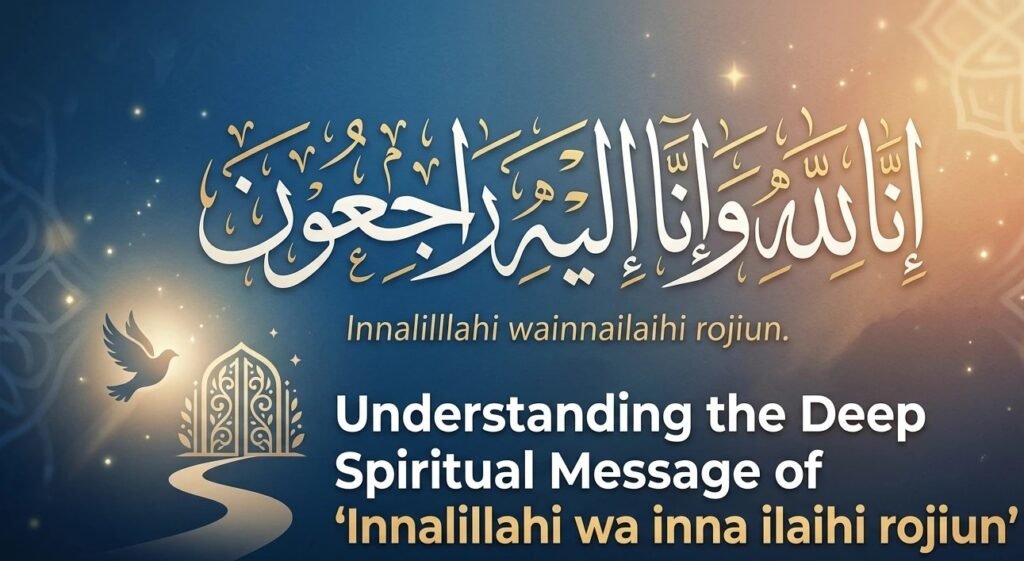
Life is full of moments that test our patience, faith, and emotional strength. In Islam, one of the most powerful phrases recited during times of hardship and loss is “Inna lillahi wa inna ilaihi raji’un” (إِنَّا لِلّهِ وَإِنَّـا إِلَيْهِ رَاجِعونَ). This short yet profound statement carries a deep spiritual message that comforts the heart and strengthens belief in Allah’s divine plan.
Muslims around the world recite this phrase when they hear news of death, face personal loss, or experience difficulties. However, its meaning goes far beyond a simple expression of grief. It is a declaration of faith, submission, and understanding of life’s temporary nature. In this article, we will explore the meaning, translations, and spiritual significance of this beautiful phrase.
Innalillahiwainnailaihirojiun means
The phrase “Inna lillahi wa inna ilaihi raji’un” is derived from the Quran, specifically from Surah Al-Baqarah (2:156). It is often referred to as a statement of patience and trust in Allah.
Breaking it down word by word:
- Inna – Indeed, we
- Lillahi – belongs to Allah.
- Wa inna – and indeed we
- Ilayhi – to Him
- Raji’un – will return.
Together, the phrase means: “Indeed, we belong to Allah, and indeed to Him we will return.”
This simple statement reflects a powerful reality: everything in this world, including our lives, possessions, and loved ones, ultimately belongs to Allah. We are only temporary caretakers. When something is taken away, it is not truly lost—it is simply returning to its rightful owner.
Innalillahiwainnailaihirojiun meaning in English
“Verily, we belong to God, and truly to Him we shall return.”
This translation captures the essence of submission and acceptance in Islam. It reminds believers that life is not permanent, and every soul has a destined return to its Creator.
When someone experiences loss, whether it is the passing of a loved one, financial hardship, or any personal difficulty, reciting this phrase offers comfort. It shifts the perspective from despair to hope by emphasising that everything happens by Allah’s will.
The phrase also encourages patience (sabr), which is a highly valued quality in Islam. By saying these words, a believer acknowledges that hardships are part of life’s journey and that ultimate justice and peace lie with Allah.
Moreover, this statement helps control emotional reactions. Instead of responding with anger or frustration, it gently guides the heart toward calmness and trust. It is a reminder that Allah is All-Wise, and His decisions carry wisdom beyond human understanding.
Innalillahiwainnailaihirojiun meaning in Urdu
“بے شک ہم اللہ کے ہیں اور بے شک ہم اسی کی طرف لوٹ کر جانے والے ہیں۔”
یہ الفاظ ایک مسلمان کے ایمان کی عکاسی کرتے ہیں۔ جب کوئی انسان کسی مشکل، نقصان یا غم کا سامنا کرتا ہے تو یہ دعا اسے صبر اور حوصلہ دیتی ہے۔
اسلام میں صبر کو بہت بڑی نعمت قرار دیا گیا ہے۔ یہ جملہ پڑھنے سے انسان کو یہ احساس ہوتا ہے کہ دنیا کی ہر چیز عارضی ہے اور اصل زندگی آخرت کی ہے۔ اس سے دل کو تسلی ملتی ہے اور انسان اللہ کی رضا پر راضی رہنے کی کوشش کرتا ہے۔
مزید یہ کہ، یہ الفاظ ہمیں عاجزی سکھاتے ہیں۔ ہم سمجھتے ہیں کہ ہم خود مختار نہیں بلکہ اللہ کے بندے ہیں، اور ایک دن ہمیں اسی کے پاس واپس جانا ہے۔ یہی سوچ انسان کے کردار اور رویے میں مثبت تبدیلی لاتی ہے۔
Innalillahiwainnailaihirojiun in Hindi
“निश्चय ही हम अल्लाह के हैं और निश्चय ही हमें उसी की ओर लौटकर जाना है।”
यह वाक्य मुसलमानों के लिए बहुत गहरी आध्यात्मिक सीख रखता है। जब कोई व्यक्ति किसी दुख, परेशानी या नुकसान का सामना करता है, तो यह वाक्य उसे धैर्य और विश्वास देता है।
इस्लाम में हर कठिनाई को एक परीक्षा माना जाता है। इस वाक्य को पढ़ने से इंसान को यह समझ में आता है कि जीवन अस्थायी है और हर चीज़ का मालिक केवल अल्लाह है।
यह वाक्य हमें यह भी सिखाता है कि हमें हर हाल में अल्लाह पर भरोसा रखना चाहिए। चाहे परिस्थितियाँ कैसी भी हों, अंततः हमें उसी के पास लौटना है। यह सोच इंसान को मजबूत बनाती है और उसे मानसिक शांति प्रदान करती है।
The Spiritual Message Behind the Phrase
Beyond its translations, the true beauty of this phrase lies in its spiritual depth. It teaches several important lessons that shape a believer’s mindset and character.
1. Acceptance of Divine Will
One of the core messages is acceptance (rida) of Allah’s decree. When a believer says this phrase, they acknowledge that everything happens according to Allah’s plan.
2. Reminder of Life’s Temporary Nature
This dunya (world) is temporary. Wealth, relationships, and even life itself are not permanent. This phrase reminds us to focus on what truly matters, our relationship with Allah.
3. Strength in Times of Grief
Loss is one of the hardest experiences in life. These words act as emotional and spiritual support, helping believers cope with pain and sadness.
4. Encouragement of Patience
Patience is not just about تحمل (tolerance); it is about trusting Allah even when things don’t make sense. This phrase reinforces that mindset.
5. A Path to Reward
In Islam, those who remain patient during hardships are promised great rewards. Reciting this phrase is a step toward earning Allah’s pleasure.
When Should You Say It?
Many people think this phrase is only used when someone passes away, but it is much broader in use. It can be recited in various situations, such as:
- Hearing news of someone’s death
- Facing personal loss (job, wealth, relationships)
- Experiencing illness or hardship
- Any moment of sadness or difficulty
Using it regularly helps build a strong connection with Allah and trains the heart to remain patient in all circumstances.
Conclusion
The phrase “Inna lillahi wa inna ilaihi raji’un” is much more than a customary expression; it is a powerful declaration of faith, humility, and trust in Allah. It reminds us that we are not owners of anything in this world, but rather caretakers on a temporary journey.
By understanding its deep spiritual message, we can transform the way we respond to life’s challenges. Instead of feeling overwhelmed by loss, we learn to accept, reflect, and grow closer to Allah.
In moments of grief and hardship, these words become a source of light, guiding the heart toward patience and peace. And ultimately, they remind us of the greatest truth of all: we belong to Allah, and to Him we will return.
Recommended: How the Quran Brings Peace to the Heart