
Finding a new job or starting a new role — is exciting, nerve-wracking, and a little bit holy. I get it: you want to do well, be useful, earn halal rizq, and feel settled. So you search for “dua for success in new job” and want something short, authentic, and practical you can actually use before the interview, on the first day, and throughout the probation period.
In this post I’ll walk you through proven Quranic verses and Prophetic supplications (with Arabic + harakat, transliteration, and clear translations), explain why each one fits a new-job situation, and share honest, usable advice on when and how to recite them so they sit naturally in your routine. I’ll also be blunt: dua matters deeply, but it’s not magic — it works alongside preparation, skill, and effort. Think of dua as your spiritual engine; you still need to steer the car. Let’s start with the most directly useful supplication for work, provision, and accepted effort, the one I recommend you keep in your pocket (figuratively).
Recommended: Dua for Happiness and Success: Powerful List of Duas in English
Recommended: Benefits of Reciting Sura Kahf Dua: Guidance and Mercy from Allah
A brief overview of these duas
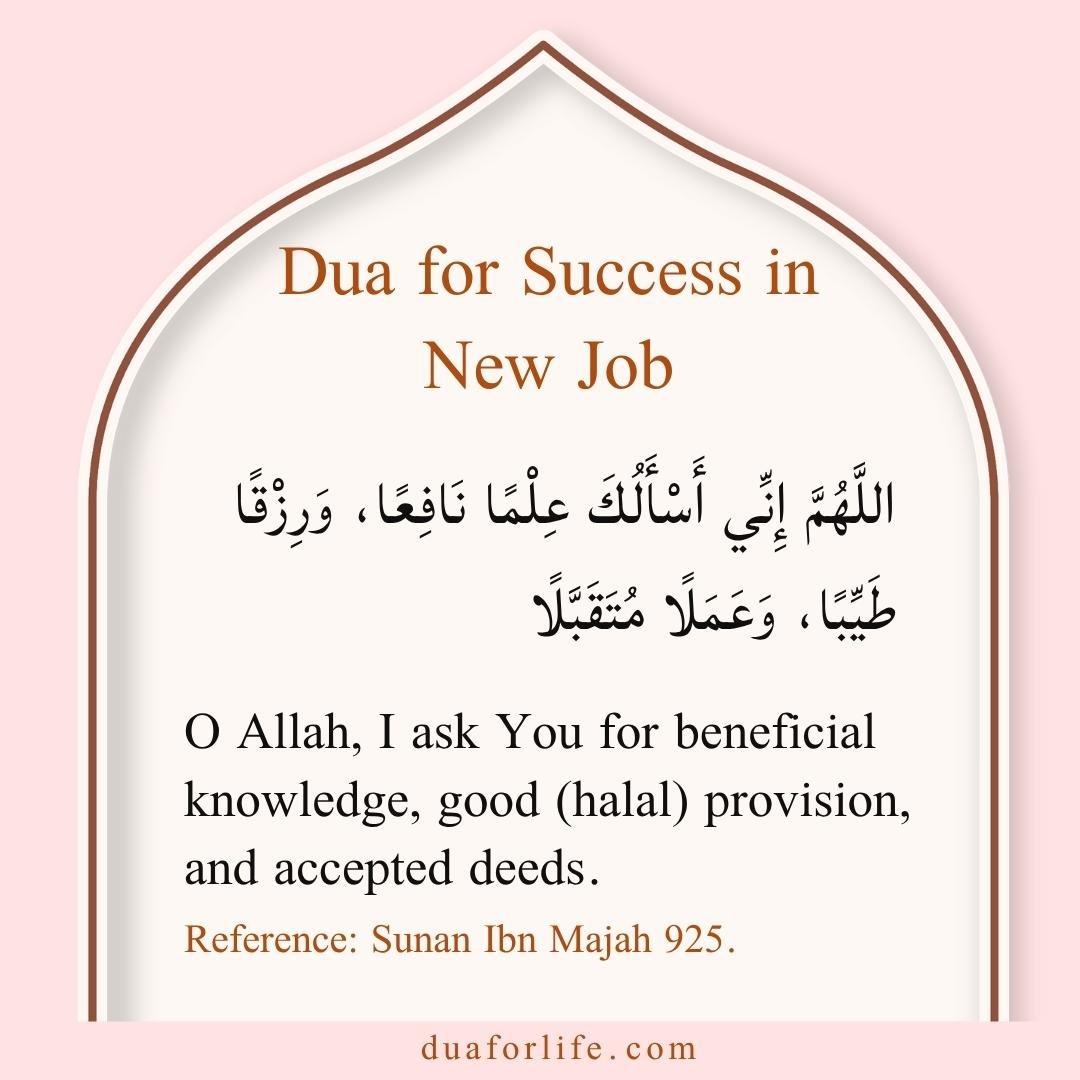
When I say “this dua” I mean primarily the short Prophetic supplication I started with (اللّهُمَّ إِنِّي أَسْأَلُكَ عِلْمًا نَافِعًا…). It’s compact and packed: knowledge to do the job well, provision so the job sustains you, and work accepted by Allah so that your effort counts. The wording is elegant because success in a job is not just money — it’s competence, blessing (barakah), and ethical provision.
Background & authenticity: The main line is reported in the Sunnah collections — i.e., it’s part of the Prophet’s taught supplications — and is widely quoted by scholars and trustworthy hadith portals. The other duas I included are Quranic verses (Prophetic situations recorded in the Quran) or well-known supplications preserved in hadith literature. I’ve added references to each so you can check them directly.
Why it fits a new-job context: Starting a job combines three needs — competence (knowledge & skill), lawful income (rizq), and that your actions be accepted (so your work has meaning). That’s exactly what the hadith dua requests. It’s short enough to memorize, dignified enough to recite publicly (e.g., silently before an interview), and flexible enough to use again and again.
Recommended: Dua for Exam Success: 5 Powerful Duas from Quran & Sunnah
Benefits of Reciting Duas for Success in New Job
I’ll keep this straightforward — the benefits I see and that classical scholars and everyday people report:
Focuses your intention (niyyah). You move from vague worries to a clear spiritual aim: to earn halal, learn, and serve.
Calms interview nerves. The Taha dua (Rabbi ishrah li sadri) in particular helps with anxiety and speaking clearly.
Reminds you to aim for halal rizq. That keeps you ethical at work — and ethically driven people stay long-term.
Invokes barakah in effort and time. Many people find that repeating these duas makes them more patient, consistent, and thankful.
Balances dunya and akhirah. The Rabbana-atina dua keeps success holistic — not just salary, but purpose.
Encourages practical action. Saying the dua usually comes with preparing — CV, study, practice — and that combination is powerful.
Easy to memorize and repeat. Short duas fit pockets, breaks, and pre-interview quiet moments.
Recommended: Dua for Tahajjud in English, Arabic with Meaning: Best Thajjud Dua
When & How to Recite
I’m practical: here’s when I recommend these duas and how to fold them into real life.
When
Before interviews and presentations: Recite Taha 20:25–28 once or a few times to center your speech and nerves. Quran.com
First thing in the morning of the first day / before starting work: Recite the main hadith dua for work (knowledge, rizq, accepted deeds). Sunnah.com
After obligatory salah (especially Fajr or Dhuhr): Dua is accepted in the quiet after prayer — use that time.
During Tahajjud (if you can): Deep, late-night supplication often helps you verbalize what’s most important.
Daily morning/evening adhkar: Short repeated recitation keeps your heart aligned with halal rizq and effort.
When feeling desperate or overwhelmed: Use the Al-Qasas 28:24 plea for provision and humility. Quran.com
How
Be specific: After the short formula, add 1–2 lines of specific personal dua. For example: “O Allah, make my probation successful, help me learn X tool quickly, make me fit well with my manager and team.” Be honest.
Combine with action: Make a 30–60 minute concrete checklist (read job docs, practice answers, update LinkedIn). Dua + effort = synergy.
Keep etiquette: Start with praise (ḥamd), send salawāt on the Prophet ﷺ, then ask. Be sincere (ikhlāṣ).
Keep it short & repeatable: A short three-line dua is more likely to be repeated and remembered.
Don’t fall for “counting rituals” scams: Simple sincerity > complicated unverified rituals. Islamic tradition honors sincerity and trust, not gimmicks.
Recommended: Dua for Rizq and Success: Duas for Increasing Rizq and Success