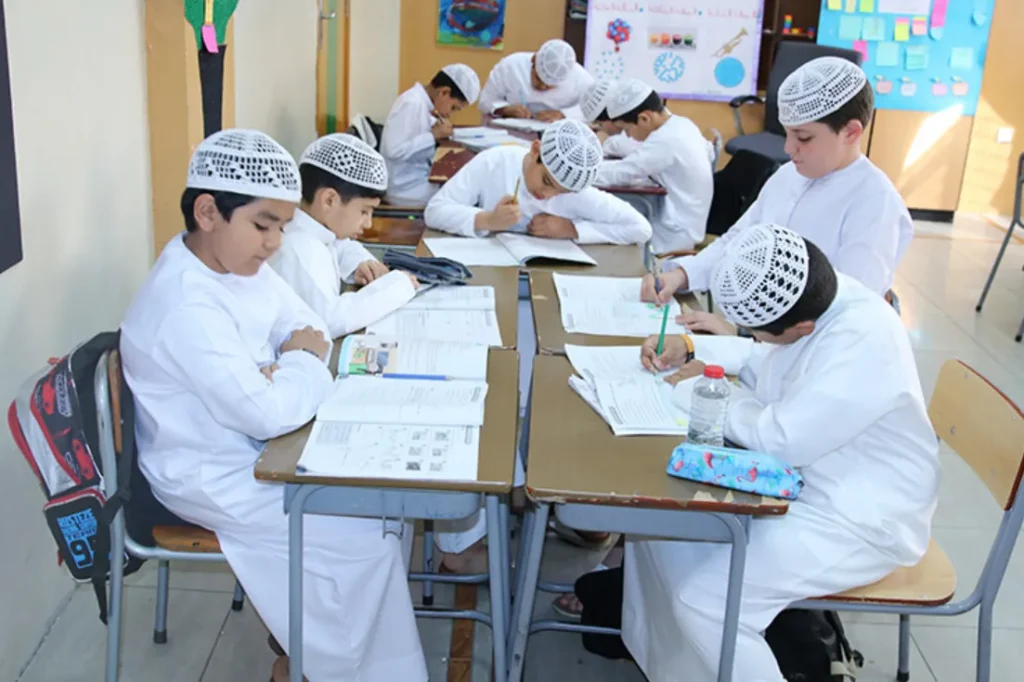
Most schools teach children what to think. The best school for Islamic education teaches them how to think, why to act, and who to be. That is a different mission. In 2024, Australia had over 40 registered Islamic schools, and enrolment numbers have grown 18% in the past decade. Families are choosing Islamic education not as a fallback but as a first choice. The question is what separates the best from the rest.
What Curriculum Standards Should the Best Islamic School Follow?
The best Islamic schools in Australia are registered with ACARA and follow state curriculum frameworks like the Victorian Curriculum. They meet the same academic benchmarks as any public or private school. On top of that, they add Islamic Studies, Quran, and Arabic as core subjects, not optional extras.
Schools that treat Islamic content as supplementary rather than central often produce students who see their faith the same way. The best schools integrate Islamic values across all subjects. Science class explores creation. History class includes Islamic civilisation. English class reads literature with moral depth.
How Do the Best Islamic Schools Support Student Wellbeing?
Wellbeing is not just about counsellors and mindfulness programs. It is about belonging. Students who feel proud of their identity at school have better mental health outcomes. A 2021 report from Beyond Blue found that cultural and religious belonging was one of the top three protective factors against youth anxiety in Australia.
Top Islamic schools create environments where the adhan is not out of place, where hijab is normal, and where fasting during Ramadan is respected and accommodated. Students do not have to choose between school and faith. That removes a major source of psychological stress.
Do Islamic Schools Produce Strong Academic Results?
Yes. Islamic schools in Australia consistently post competitive ATAR results. Some of Melbourne’s Islamic schools have median ATARs above 75, placing them among the top 40% of all Victorian schools. The combination of academic rigour, disciplined daily structure, and motivated families produces strong outcomes.
Parental involvement also plays a role. Families who choose Islamic schools tend to be more engaged with their child’s education. That engagement is one of the strongest predictors of academic achievement, according to a 2022 meta-analysis from the Review of Educational Research.
What Teaching Approach Works Best in Islamic Schools?
The best Islamic schools use direct instruction for foundational content and Socratic discussion for values and ethics. Direct instruction is the most evidence-based method for teaching reading, maths, and Quran recitation. It is clear, structured, and effective. Socratic discussion builds critical thinking around Islamic ethics, history, and jurisprudence.
Teachers in these schools are not just academically qualified. They are practicing Muslims who model the values they teach. That congruence between what is taught and how teachers live is something students notice. It builds trust and makes the education feel real, not performative.
Why Does School Culture Matter More Than Resources?
A school with modest resources but a strong culture will outperform a well-funded school with a weak culture every time. Culture is the invisible curriculum. It is what students absorb just by being in the building every day. The best Islamic schools have a culture of respect, hard work, and pride in Muslim identity.
That culture is built through daily habits: greeting with Salam, helping others, praying on time, being honest even when it is hard. Schools that practise these habits consistently produce graduates who carry them into adult life. That is the real measure of the best school for Islamic education.


